The Hidden Link: How Sleep Apnea and Dentistry Are Connected
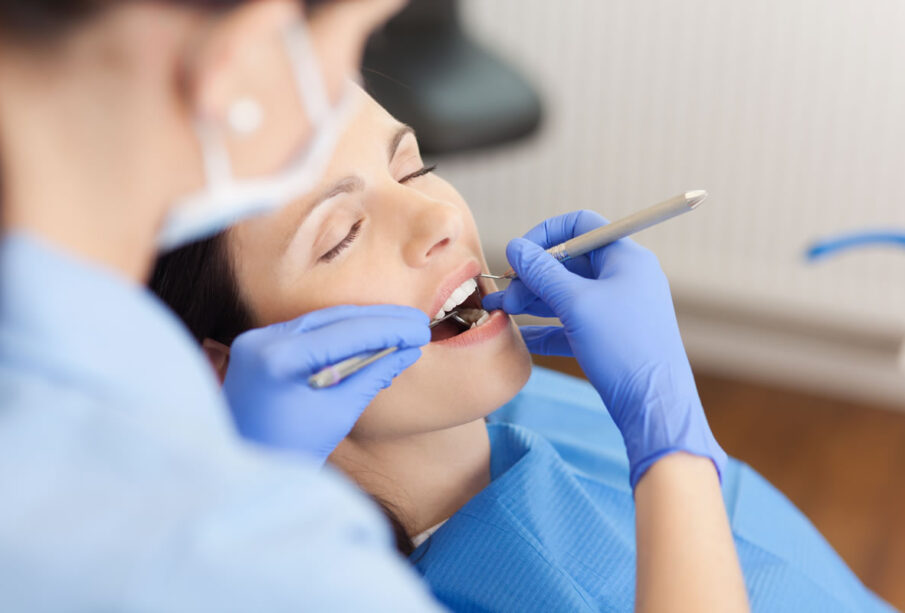
When most people think of a good night’s rest, they picture a comfortable mattress, a dark room, and a quiet environment. Rarely do they consider the alignment of their jaw, the size of their tongue, or the shape of their dental arches. However, the medical community increasingly recognizes that the quality of your sleep is deeply intertwined with your oral health.
Sleep apnea, a serious and potentially life-threatening sleep disorder, is no longer viewed solely as a respiratory issue managed exclusively by pulmonologists. Today, dentists are on the front lines of screening, diagnosing, and treating this condition.
Understanding the profound connection between dentistry and sleep apnea can be the key to reclaiming your energy, protecting your cardiovascular health, and achieving truly restorative rest.
What Is Sleep Apnea?
To understand why a dentist cares about your sleep, it is necessary to understand what happens to the body during a sleep apnea episode.
There are three main types of sleep apnea:
-
-
Obstructive Sleep Apnea (OSA): The most common form, which occurs when the muscles in the back of the throat relax excessively, allowing the soft tissues to collapse and block the airway.
-
Central Sleep Apnea: A neurological condition where the brain fails to send the proper signals to the muscles that control breathing.
-
Complex Sleep Apnea Syndrome: A combination of both obstructive and central sleep apnea.
-
When the airway collapses in OSA, the brain senses a lack of oxygen and a buildup of carbon dioxide. It briefly jolts the body awake to reopen the airway. These micro-arousals can happen dozens or even hundreds of times a night. While patients rarely remember these awakenings, the disruptions prevent the body from entering deep, restorative sleep phases, leading to chronic exhaustion and severe systemic health risks.
Why Dentists Are the Ultimate Gatekeepers for Sleep Apnea
Many individuals with undiagnosed sleep apnea visit their dentist far more regularly than they visit a primary care physician. Because the physiological signs of sleep apnea often manifest inside the oral cavity, a dentist is uniquely positioned to spot the early warning signs during a routine cleaning or examination.
During an oral exam, a dentist evaluates more than just your teeth and gums. They assess the entire oral architecture. Several specific anatomical markers suggest a high risk for obstructive sleep apnea:
An Enlarged Tongue or Scalloped Tongue
If a patient has a tongue that is too large for their jaw, it is much more likely to fall backward into the throat when they lie down. A telltale sign of this is a “scalloped tongue,” which features indented impressions along the sides of the tongue caused by it constantly pressing tightly against the teeth.
Enlarged Tonsils or Adenoids
This is particularly common in pediatric sleep apnea, but adults can also possess enlarged tonsils that drastically narrow the breathing passage.
A Narrow Palate or Crowded Teeth
A high, arched hard palate often restricts the nasal passages directly above it, limiting airflow. Furthermore, a crowded lower arch can force the tongue backward toward the throat.
A Recessed Jaw (Retrognathia)
If the lower jaw is naturally positioned too far back, the entire airway structure is compressed, making collapse during sleep far more probable.
The Unexpected Link: Teeth Grinding and Sleep Apnea
One of the most significant clinical connections between dentistry and sleep apnea is bruxism, or teeth grinding. For decades, the dental community believed that teeth grinding was caused entirely by stress or a misaligned bite. While those factors do play a role, modern sleep medicine shows that bruxism is frequently a protective mechanism triggered by the body to survive sleep apnea.
When the airway collapses during an OSA episode, the brain panics due to the drop in oxygen. To reopen the airway, the brain commands the jaw muscles to clench and grind. This action forces the lower jaw forward and stiffens the muscles of the throat, temporarily opening the passage so the patient can take a breath.
If a dentist notices flattened tooth surfaces, fractured dental work, or a patient complains of chronic morning headaches and a sore jaw, they will look past stress and evaluate the patient for underlying airway issues. Treating the sleep apnea often cures the teeth grinding entirely.
Beyond Grinding: Other Oral Symptoms of Airway Obstruction
Aside from worn-down teeth, sleep apnea creates an environment in the mouth that leads to several distinct dental complications:
-
Chronic Dry Mouth: Sleep apnea patients are almost always mouth-breathers. Breathing through the mouth all night dries out saliva, which is the mouth’s natural defense against bacteria.
-
Increased Cavities and Gum Disease: Because a dry mouth lacks adequate saliva to wash away acids and neutralize bacteria, patients with sleep apnea often experience a sudden spike in tooth decay and periodontal disease despite maintaining good oral hygiene.
-
Inflamed Gums: Continuous mouth-breathing dries out the gingival tissues, causing them to become red, irritated, and highly susceptible to bleeding.
How Dentists Treat Sleep Apnea: Oral Appliance Therapy
For many years, the gold standard treatment for obstructive sleep apnea was the Continuous Positive Airway Pressure (CPAP) machine. While highly effective, CPAP therapy suffers from notoriously low patient compliance. Many individuals find the mask uncomfortable, the machine noisy, and the restriction of movement frustrating.
This is where dental sleep medicine provides a highly effective alternative for mild to moderate cases of OSA. Dentists trained in this field can design customized Oral Appliance Therapy (OAT) devices.
An oral appliance looks similar to a sports mouthguard or an orthodontic retainer. It is worn only during sleep and works by gently advancing the lower jaw and tongue forward. This subtle movement keeps the airway open, prevents the soft tissues from collapsing, and eliminates snoring.
The benefits of utilizing an oral appliance include:
-
High Compliance: Patients find them far more comfortable and less intrusive than a CPAP mask.
-
Portability: The devices fit into a small pocket-sized case, making them ideal for travel.
-
No Noise: Unlike CPAP machines, oral appliances operate completely silently, benefiting both the patient and their bed partner.
-
Custom Fit: Because they are digitally or manually impressions-molded to the patient’s exact bite, they carry minimal risk of permanently shifting the teeth when properly monitored.
The Collaborative Care Model
It is vital to note that while dentists are crucial in identifying and treating sleep apnea, they do not act alone. A dentist cannot legally diagnose sleep apnea; that responsibility lies with a board-certified sleep physician.
The process typically follows a specific collaborative path:
-
Screening: The dentist identifies oral signs, reviews symptoms (like daytime fatigue and loud snoring), and uses screening questionnaires.
-
Referral: The dentist refers the patient to a sleep specialist.
-
Testing: The patient undergoes a polysomnography (overnight sleep study) or a home sleep test.
-
Diagnosis and Prescription: If the sleep specialist diagnoses mild to moderate OSA and determines an oral appliance is suitable, they prescribe the device.
-
Fabrication and Follow-Up: The dentist custom-crafts the appliance, fits it, and monitors the patient’s dental alignment over time to ensure long-term safety and success.
Frequently Asked Questions
Can a regular nightguard for teeth grinding also cure my sleep apnea?
No. A standard nightguard made for bruxism is designed solely to protect the teeth from friction and wear. It does not advance the jaw forward to keep the airway open. In fact, some traditional nightguards can actually make sleep apnea worse by taking up valuable space in the mouth and forcing the tongue further back into the throat.
Is oral appliance therapy covered by dental insurance or medical insurance?
Because sleep apnea is classified as a medical condition rather than a dental disease, oral appliance therapy is typically covered under medical insurance or Medicare, rather than dental insurance policies. The coverage depends on the severity of your diagnosis and the specific terms of your medical policy.
How do I know if I am a candidate for a dental sleep appliance instead of a CPAP?
Generally, oral appliances are recommended for individuals diagnosed with mild to moderate obstructive sleep apnea, or for those with severe apnea who are completely unable to tolerate a CPAP machine. A comprehensive evaluation by both a sleep physician and a qualified dental sleep specialist is necessary to make this determination.
Can children use oral appliances to treat sleep apnea?
Children are usually treated differently because their jaws are still actively growing. Instead of a mandibular advancement device, pediatric sleep apnea tied to dental issues is often treated using rapid palatal expanders to permanently widen the airway, or through the surgical removal of tonsils and adenoids.
Does wearing a sleep apnea dental appliance cause permanent jaw changes?
There is a minor risk of subtle tooth movement or changes in your bite over years of continuous use. To mitigate this, dental sleep specialists provide a morning repositioning device to help reset your jaw to its natural alignment every day, alongside scheduling regular check-ups to monitor your bite.
How long does a custom sleep apnea oral appliance typically last?
With proper care, cleaning, and maintenance, a high-quality, custom-fabricated oral appliance generally lasts between three to five years before it requires replacement due to material wear and tear.